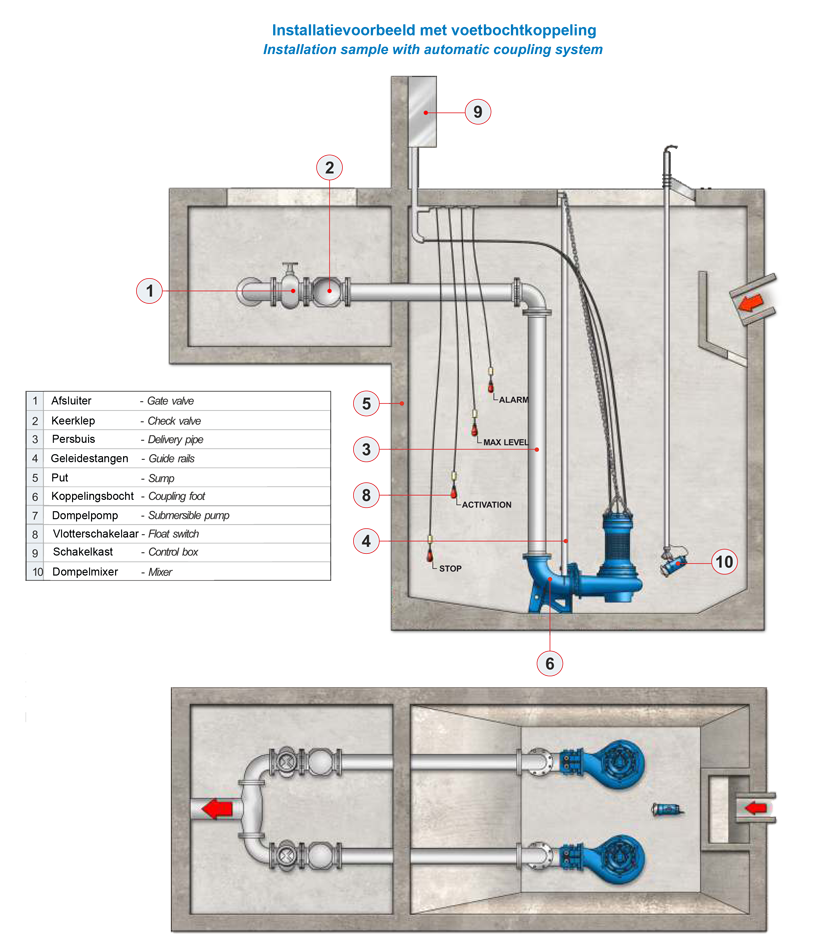
Submersible pumps
As the pump is always located at the bottom (often at the bottom of a well), it can pump the liquid up to any desired height within the limits of the drive’s power and the pressure that the pump and the connected discharge pipe can withstand.
A key limitation of submersible pumps is the cooling of the motor. The most common (dry-run) electric motors are air-cooled by means of a fan. This technique cannot be used with submersible motors. In many cases, it is the pumped liquid itself that cools the motor. This is why, in most cases, the pump may only be started when it is fully submerged, and why the operating instructions specify the conditions for intermittent operation. Submersible pumps are mainly used for: lowering the water table, pumping groundwater for drinking water or fire-fighting water, and pumping out drainage water, effluent and waste water.